Source Foldable Rechargeable Book Reading Light for Reading, Travel, Study
Explore 30 options for the foldable rechargeable book reading light designed for reading, travel, and study. Compare specifications like color temperature, battery type, and dimensions to find the ideal clip-on lamp for your needs.
Key considerations
Products List
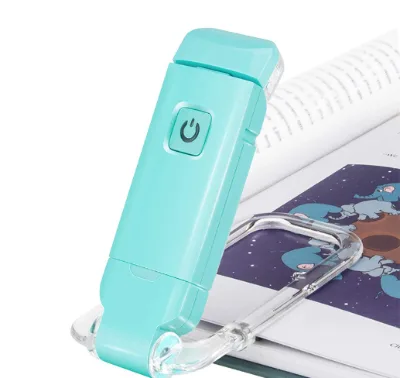
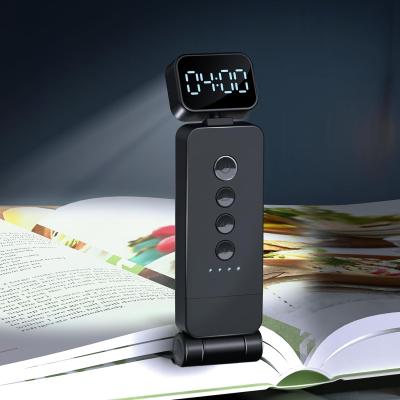



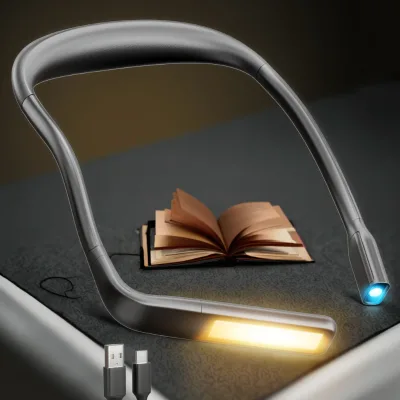

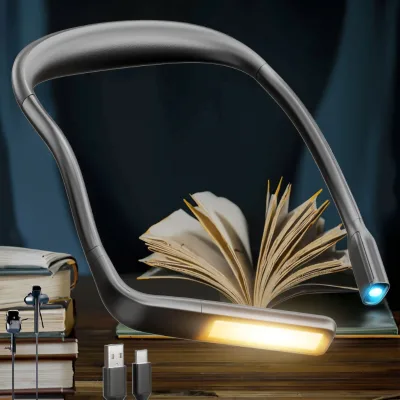


Comprehensive Sourcing Guide
Strategic Sourcing Guide for Foldable Rechargeable Book Reading Lights
Understanding Product Architecture and Technical Specifications
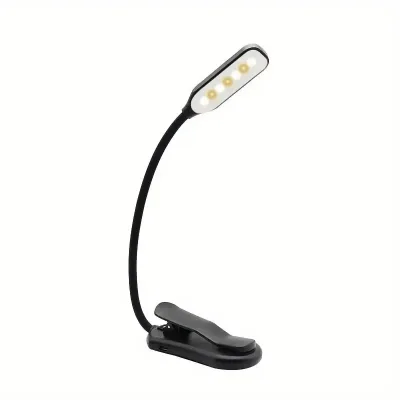
When sourcing foldable rechargeable book reading lights, buyers must first distinguish between the specific architectural configurations available in the market. The product category encompasses devices designed primarily for portable illumination in low-light environments, such as reading in bed or studying in dimly lit areas. Based on current market observations, these units typically utilize LED light sources to ensure energy efficiency and a long operational lifespan. The core mechanical design often features a foldable structure, allowing the device to transition from a compact storage state to an expanded lighting configuration. This foldability is frequently integrated with a clip mechanism, enabling the light to attach securely to book pages, headboards, or desk edges without the need for external stands.
The electrical architecture of these devices varies significantly between models, requiring careful verification of input voltage and battery specifications. Some units operate on a DC 6V input, while others are designed for standard DC 5V inputs, which is common for USB-powered rechargeable devices. The power consumption for these lamps generally ranges around 3 Watts, balancing brightness with battery longevity. A critical technical parameter to verify is the Color Rendering Index (CRI), which determines how accurately colors appear under the light. Market data indicates a divergence in CRI values, with some models offering a Ra of 60, suitable for basic illumination, while others provide a higher Ra of 80, offering superior color fidelity for detailed reading tasks.
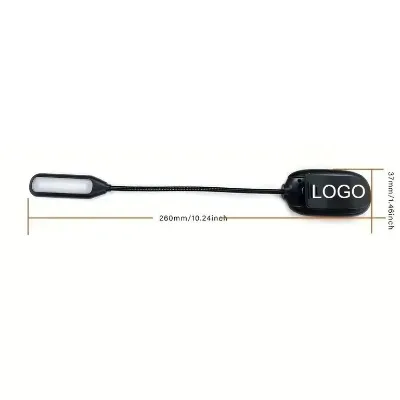
Color temperature is another pivotal specification that influences the user experience. Buyers should expect to find options ranging from neutral white, often cited around 4100K, to models offering three distinct color temperature settings. This multi-mode capability allows users to adjust the light from warm to cool tones depending on the time of day or personal preference. The physical dimensions of these products are also variable; compact models may measure approximately 9.8 cm in length, while others with extended clip arms can reach dimensions like 34 cm by 124 mm. The housing material is predominantly ABS plastic, chosen for its durability and lightweight properties, often complemented by a plastic shade that may be available in white or other colors.
Compliance Verification and Certification Standards
Navigating the compliance landscape is essential for international procurement, particularly when importing electronic lighting products. The primary certifications to look for include RoHS and CE, which indicate adherence to specific environmental and safety standards. RoHS compliance ensures that the product does not contain restricted hazardous substances, a critical requirement for markets in Europe and increasingly in other regions. CE marking signifies that the manufacturer claims conformity with health, safety, and environmental protection standards for products sold within the European Economic Area.
However, buyers must exercise caution when interpreting certification claims. While these certifications are frequently listed in product specifications, the presence of a mark does not automatically guarantee that every unit in a production batch has passed independent third-party testing. It is imperative to request valid test reports from the supplier to verify the authenticity of these certifications. The absence of specific test data in the provided product descriptions means that buyers cannot assume universal compliance based solely on the listing. Instead, the procurement strategy should involve a rigorous document review process where the supplier provides the specific test certificates corresponding to the batch being ordered.
Furthermore, the electrical safety of the device is paramount. Since these are rechargeable units containing lithium batteries, the design must mitigate risks associated with overcharging, short circuits, and thermal runaway. While specific safety standards like UL or IEC may not be explicitly detailed in general product listings, the inclusion of CE and RoHS suggests an attempt to meet baseline regulatory requirements. Buyers should verify if the supplier has a history of passing customs inspections in their target markets, as non-compliant electronics are frequently seized at borders. The warranty period, often listed as one year, serves as a secondary indicator of the manufacturer's confidence in their product's compliance and durability, though it does not replace the need for independent verification of safety standards.
Cost Drivers and Pricing Dynamics
The pricing structure for foldable rechargeable book reading lights is influenced by a complex interplay of technical specifications, material costs, and order volume. The observed market price range for these units spans from approximately $1.25 to $12.00 USD. This wide variance is not arbitrary but is directly correlated with the quality of components and the feature set of the device. Models at the lower end of the price spectrum typically feature a single color temperature, a lower CRI (such as Ra 60), and a simpler switch control mechanism. They may also utilize standard lithium batteries with a shorter rated lifespan.
Conversely, products commanding prices toward the higher end of the range often include advanced features such as multi-color temperature settings, higher CRI values (Ra 80), and more robust build quality. The inclusion of a dimmer function, which allows for adjustable brightness, is another significant cost driver that can elevate the price point. Additionally, the design complexity plays a role; units with intricate folding mechanisms or premium finishes may incur higher manufacturing costs. The material composition, specifically the use of high-grade ABS plastic and the quality of the LED chips, also contributes to the final cost.
Order quantity is a critical factor in determining the unit price. The Minimum Order Quantity (MOQ) for these products can vary widely, ranging from as low as 1 unit for sample orders to 5000 units for bulk procurement. Suppliers typically offer tiered pricing structures where the per-unit cost decreases as the order volume increases. This is due to the amortization of setup costs and the efficiency gains in mass production. Buyers should be aware that while a low MOQ allows for testing the market with minimal financial risk, it often results in a higher per-unit cost. For large-scale distribution, negotiating a lower MOQ or securing a better price point requires a clear understanding of the supplier's production capacity and their willingness to accommodate specific volume requirements.
Typical Applications and Usage Scenarios
The primary application for foldable rechargeable book reading lights is in residential settings, specifically tailored for reading and night-time illumination. These devices are designed to provide focused light without disturbing others, making them ideal for bedrooms where a user may wish to read before sleep without turning on a main room light. The clip-on design allows the light to be attached directly to a book, headboard, or bedside table, providing a hands-free solution that is particularly beneficial for those with limited mobility or who prefer reading in bed.
Beyond the bedroom, these lights find utility in various other scenarios. The portability of the device makes it suitable for travel, allowing users to have a reliable light source in hotels, dormitories, or during camping trips. The rechargeable nature of the battery eliminates the need for disposable batteries, offering a cost-effective and environmentally friendly solution for frequent travelers. The lighting solutions services offered by some manufacturers, such as lighting and circuitry design, suggest that these products can also be customized for specific project lighting designs, potentially extending their use to commercial or hospitality environments where ambient lighting needs to be adjusted for specific tasks.
The versatility of the product is further enhanced by its design features. The foldable structure ensures that the light can be easily packed into a bag or pocket, while the clip mechanism provides stability on various surfaces. The availability of different color temperatures allows users to select a light that suits their circadian rhythm, with cooler tones for focused reading and warmer tones for relaxation. The usage classification as a "reading night light" underscores the product's role in creating a comfortable and functional lighting environment for personal use. Whether for a student studying late at night or an adult reading a book before bed, the foldable rechargeable book reading light offers a practical and efficient solution.
Supplier Evaluation and Quality Control Protocols
Selecting the right supplier is a critical step in the procurement process, requiring a thorough evaluation of their capabilities and quality control measures. Buyers should prioritize suppliers who provide transparent information about their production processes and quality assurance protocols. The place of origin for many of these products is identified as Zhejiang, China, a region known for its manufacturing capabilities in consumer electronics. However, the presence of a specific location does not guarantee quality; buyers must verify the supplier's track record and reputation in the industry.
Quality control should be a central focus during the supplier selection process. Buyers should inquire about the supplier's inspection procedures, including in-line quality checks and final random inspections. Given the variation in product attributes such as CRI and color temperature, it is essential to ensure that the supplier can consistently meet the specified requirements. The warranty period, typically one year, is a key indicator of the supplier's confidence in their product. A longer warranty period may suggest a higher level of quality control and a commitment to customer satisfaction.
Buyers should also evaluate the supplier's ability to provide lighting solutions services, such as circuitry design and light drawing. This capability indicates a higher level of technical expertise and the potential for customization. When evaluating suppliers, it is important to request samples to verify the physical attributes of the product, such as the foldability, clip strength, and battery performance. The single package size and gross weight are also important logistical considerations, as they affect shipping costs and storage requirements. By conducting a comprehensive supplier evaluation that includes technical verification, quality control assessment, and logistical planning, buyers can mitigate risks and ensure a successful procurement outcome.
Long-Term Procurement Considerations and Lifecycle Management
Sourcing foldable rechargeable book reading lights involves more than just an initial transaction; it requires a strategic approach to long-term procurement and lifecycle management. The working time of these devices is often cited as 50,000 hours, while the lifespan of the LED light source is typically around 3,000 hours. These figures highlight the importance of understanding the product's durability and the frequency of replacement required. Buyers should consider the total cost of ownership, including the cost of replacement units and the potential impact of product failures on their business operations.
The battery type, specifically lithium, is another critical factor for long-term management. Lithium batteries have a finite number of charge cycles, and their performance can degrade over time. Buyers should verify the supplier's specifications regarding battery cycle life and replacement policies. Additionally, the availability of spare parts, such as replacement batteries or charging cables, is essential for maintaining the product's functionality over its lifecycle. The packaging dimensions and weight, such as the single package size of 8x15x1.5 cm and a gross weight of 7.000 kg for a carton, are important for logistics planning and inventory management.
As the market evolves, buyers should stay informed about emerging trends and technological advancements in the lighting industry. The shift towards more energy-efficient and environmentally friendly products may influence future procurement decisions. Buyers should also consider the potential for customization, such as branding or specific design modifications, to differentiate their products in a competitive market. By adopting a proactive approach to long-term procurement, focusing on quality, sustainability, and supplier relationships, buyers can ensure a steady supply of high-quality foldable rechargeable book reading lights that meet the evolving needs of their customers.
FAQs
What is the typical Color Rendering Index for these lights?
The Color Rendering Index varies between models, with observed values of Ra 60 and Ra 80. Buyers should verify the specific CRI for their chosen model as it affects color accuracy during reading tasks.
Which input voltage options are available for these lamps?
Available input voltages include DC 6V and DC 5V depending on the specific model. Users must check the product specifications to ensure compatibility with their power source or charging adapter.
Can these lights support dimming functionality?
Support for dimming varies by model, with some units supporting dimmer functions while others do not. Buyers must confirm the specific control mode and dimming capability before placing an order.
What certifications are commonly listed for these products?
Commonly listed certifications include RoHS and CE, indicating compliance with environmental and safety standards. Buyers should request valid test reports to verify these certifications for specific production batches.
How long is the typical lifespan of the LED source?
The listed lifespan ranges from 3000 hours to 50000 hours depending on the specific product model. Users should review the technical specifications to understand the expected operational duration for their needs.
What is the minimum order quantity for these lights?
The minimum order quantity ranges from 1 unit to 5000 units based on supplier policies. Buyers can often start with a single unit for sampling before committing to larger bulk orders.